Rab Island
The Parallax ViewRab Island enters the account as both a site of wartime resistance and the subject of a later act of bitter commemoration. In 1943, prisoners there rebelled against their Italian captors; ten years later, the uprising’s leader, by then imprisoned by the Communist authorities, was mobilized to help build a monument celebrating it. The island thus anchors a story in which revolutionary achievement survives, but under a regime that turns its former agents against their own past.
Setting and the 1943 Rebellion
During the Italian capitulation in 1943, Joe Jurani, an old Slovene Communist revolutionary, led a rebellion by Yugoslav prisoners at a concentration camp on Rab Island, in the Adriatic. Under his leadership, 2,000 starving prisoners disarmed 2,200 Italian soldiers. The account presents this not merely as a successful uprising, but as a defining act in Jurani’s revolutionary life: the prisoners’ collective action briefly overturned their position as captives.
From Uprising to Imprisonment
After the war, Jurani was arrested and imprisoned at nearby Goli Otok, a notorious Communist concentration camp. His change of circumstance reverses the meaning of his earlier resistance. The former leader of prisoners who had disarmed their guards now found himself confined by the political order established after the revolution for which he had fought.
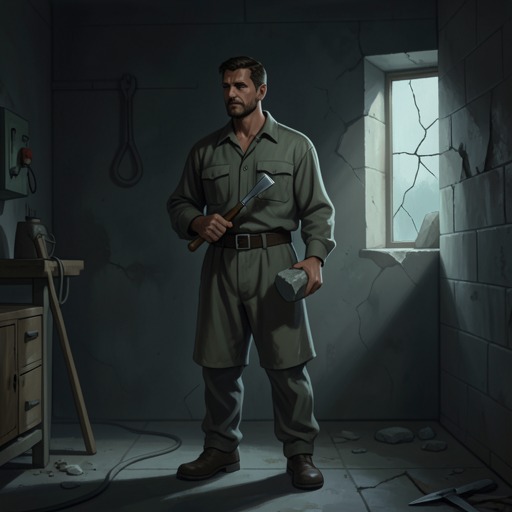
In 1953, while still a prisoner, Jurani was mobilized with other inmates to build a monument commemorating the tenth anniversary of the Rab rebellion. The construction made the contradiction concrete: he was helping erect a public memorial to an uprising he himself had led, while held by the Communist authorities. Rab Island’s history therefore returns not only as a celebrated past, but as a task imposed on one of the people who made that past.
A Place in the Argument about Revolution
The episode makes Rab Island central to the book’s account of Stalinist betrayal. Jurani’s fate is treated as a universal singular: the experience of one revolutionary stands for the millions who overthrew the old order and were later subjected to new rulers. The monument’s significance lies in this reversal. Revolutionary memory persists, yet those who embody it can be forced to serve the regime that has repudiated them.
Rab Island consequently signifies both the possibility of collective resistance and the afterlife of that resistance under a new political power. The rebellion is remembered through a monument, but the circumstances of its construction deny any simple reconciliation between revolutionary achievement and the system that claims its legacy.